
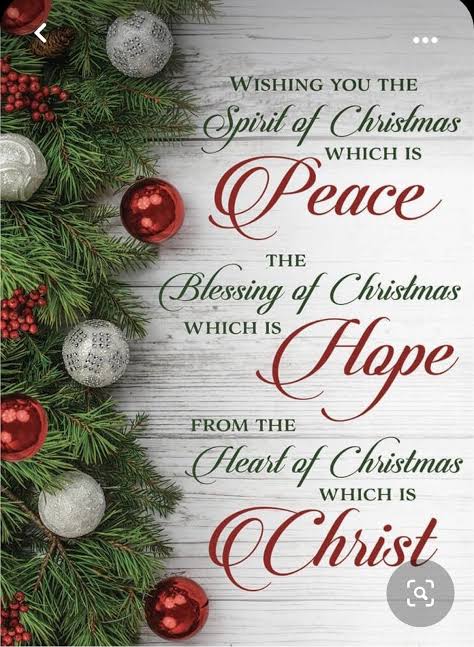
Merry Christmas!

On behalf of all the orphans and abandoned children in the various homes, we would like to thank you for all the interactions, support, regular contributions and special donations made by you to the ministry during 2023.
We wish you a very blessed Christmas and God’s richest blessings for the year ahead.
Henry and Annette Pool

Radio sonder Grense helps Heart for Children!
RSG (Radio sonder Grense) was kind enough to give us an interview to tell something about Heart for Children and our current project. Click on the triangle to listen to the broadcast:
RSG 'Help" broadcast of 19.12.2023 at 16h40
To contribute to this project, please click here: DONATE | Heart for Children,

Showers of Blessings!
In June this year, we celebrated 15 years of Heart for Children! Amazing, all this time, for me and Annette to be serving the children and the mothers in the homes that received support from us and to appreciate all the thank-you notes that we received from them. Actually, these should have also been addressed to you, our partners and supporters! It was such a privilege for us to be able to help. Sometimes you get to thinking that what we do is only a drop of water falling on a hot plate. But, just imagine when that drop is falling exactly on top of a mother or child who really needs it….Jochi, the mother of the safe house in Nellmapius, told me the other day that she was so happy with the roof that was repaired and the ceiling that was installed as the temperature inside the house was much cooler in summer and warmer in winter.
How good it is to look back and be thankful for all that was achieved. But is our mission finished? No, unfortunately anything but…We are confronted daily with the reality of wars, the results of extreme weather, hunger, drug abuse, criminality, abuse of children – you name it. I was so discouraged the other day on learning that more that 5000 children in Gaza have died because of the war. They are thinking of putting up a special cemetery to bury them. How terrible is that? A cemetery full of innocent children. It made me want to cry…..I just don’t have words for this. But I did find comfort in the shortest sentence in the Bible:
‘Jesus wept’.
Whenever we weep – because we do not understand why these dreadful things happen to us – , God is weeping with us. Blessed are those who mourn for they will be comforted (Matt. 5:4).
Closer to home, we are confronted daily with the problem of insufficient power for all the homes of South-Africa. Obviously, this also affects the foster homes and orphanages. However, I am getting a strong feeling that we can beat this problem. “ ‘n Boer maak ‘n plan, tog?” It seems South Africans are not going to sit still but are fighting back by installing solar power and doing their cooking on gas stoves. I recently wrote something about that, click on the link below:
South-Africans are kissing ESKOM goodbye…. | Bread on the water
I am sure we can identify with one of the beneficiaries of Heart for Children, namely the Rehoboth children’s village near Murchison in KZN, who reported that with stage 6 load shedding they have no electricity for 13 hours a day. We would like to help them by converting their office, school, and, as far as possible, all the children’s homes, onto solar and gas. We have a challenge going on with our parent company in the Netherlands, ‘Hart voor Kinderen’. Seeing the problem with the power shortages at the orphanage, they have promised that they will sponsor us Rand for Rand! This means that our contributions in South-Africa for this project will be doubled up by Hart voor Kinderen in the Netherlands. We then asked for your help https://breadonthewater.co.za/2023/10/27/summer-newsletter-special-appeal/
and I can give feedback now that, so far, we have already collected 62000 raindrops. I am so encouraged! This includes of course the amount that will be sponsored by Hart voor Kinderen in the Netherlands. We had a song that we used to sing in church, a long time ago: “There will be showers of blessings.” Yes. Indeed. I can feel those raindrops coming now. It will be a shower. We need a big shower for those 20 homes in the Rehoboth children’s village.
At Christmas we are reminded of the Light who came into the world. Christ who told us: you are the light of the world. How amazing is that? We take this light with us wherever we are or go. We have God’s DNA within us. When the lightning strikes, darkness cannot exist. That is the power of love: let us share that Love with all our heart. Like flashes of lightning that make the darkness go away, let us not grow tired of doing the best we can!
Henry Pool, Cel +27836297690 e-mail: henrypool7@gmail.com
Annette Pool, Cel +27834696875 e-mail: annette.pool@gmail.com

South-Africans are kissing ESKOM goodbye….
Wherever I go nowadays, I am amazed at how South Africans are adapting to the situation of not getting enough electricity from ESKOM. Whether it is visiting family or friends, the MAKRO, hospitals or shopping malls: everywhere I see people putting up solar panels to beat the electricity shortage. I was amazed the other day when I visited the Kolonade shopping mall here in Montana, in Tshwane. I made a few pictures:


Ja. Ja. ‘n Boer maak ‘n plan! I could not even count the number of solar panels that I observed here. It covers the whole area that used to be the uncovered parking area to the south of the mall. I was also glad to be able to park my car directly underneath, as the panels actually do have the secondary function of providing shade for parked vehicles. I am keeping my fingers crossed that the parking on the south side will continue to be free of charge – as it always has been – and I am sure that all those panels do provide enough electricity for the whole centre during the working hours.
Yes! We are blessed here in South Africa, especially Pretoria and Johannesburg, with a lot of sunshine and therefore this is definitely going to work for all of us. Just one word of caution. We also have a lot of dust here, especially during the dry winter times. That means that the panels may need to be cleaned at regular intervals. No problem with that. But you have to be careful. I already know of one friend and dear fellow brother in Christ who had an unfortunate accident while trying to get down from the roof after cleaning the panels. Please ensure you take or create all the necessary safety precautions when trying to clean the panels.
Note that if you want to convert your home to be completely – or almost completely – independent of ESKOM power, you will have to convert your cooking to gas. We recently bought a gas stove & oven in addition to all our electrical cooking. It perfectly works for us when the power is down. Again a word of caution: remember that according to regulations (e.g. insurance) you are not allowed to have a cylinder of more than 9kg of LPG gas inside your house. Otherwise you need to drill a hole through the wall and put the gas cylinder outside.

I am sure we can indeed identify with one of the beneficiaries of Heart for Children, namely the Rehoboth children’s village near Murchison in KZN, who reported that with stage 6 load shedding they have no electricity for 13 hours a day. We would like to help them converting their office, school and, as far as possible, all the children’s homes onto solar and gas. Will you help us? We have a challenge going on with our parent company and this means that your contribution will be doubled up by Hart voor Kinderen in the Netherlands. Please click on the link below.

I will sing!
Take some time off from the worries of our land and listen to these worship songs from Michael W. Smith and Don Moen!
Recent Comments