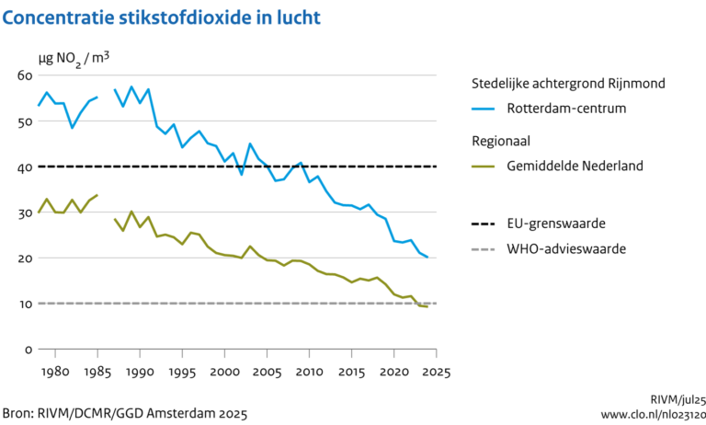
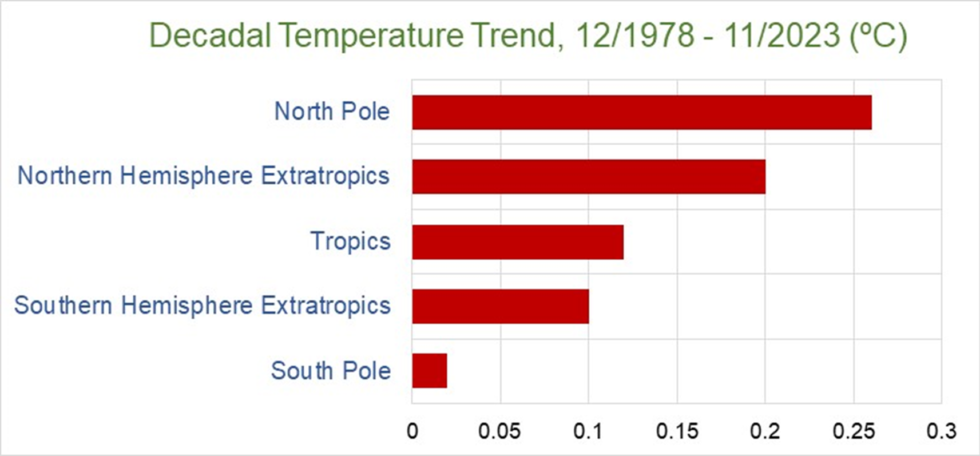
Lucy Biggers: From Climate Activist to Climate Realist
It is worth listening to the story of Lucy Biggers on how she became skeptic of all the disadvantages attributed to global warming; but hehhh….can she talk fast, heh?
12 “What do you think? If a man owns a hundred sheep, and one of them wanders away, will he not leave the ninety-nine on the hills and go to look for the one that wandered off?
13 And if he finds it, I tell you the truth, he is happier about that one sheep than about the ninety-nine that did not wander off.
14 In the same way your Father in heaven is not willing that any of these little ones should be lost.
15 “If your brother sins against you, go and show him his fault, just between the two of you. If he listens to you, you have won your brother over.
16 But if he will not listen, take one or two others along, so that ‘every matter may be established by the testimony of two or three witnesses.’
17 If he refuses to listen to them, tell it to the church; and if he refuses to listen even to the church, treat him as you would a pagan or a tax collector.
18 “I tell you the truth, whatever you bind on earth will be bound in heaven, and whatever you loose on earth will be loosed in heaven.
19 “Again, I tell you that if two of you on earth agree about anything you ask for, it will be done for you by my Father in heaven.
20 For where two or three come together in my name, there am I with them.” Matt 18:12-20 (NIV)
“Or suppose a woman has ten silver coins and loses one. Doesn’t she light a lamp, sweep the house and search carefully until she finds it? And when she finds it, she calls her friends and neighbours together and says, ‘Rejoice with me; I have found my lost coin.’ In the same way, I tell you, there is rejoicing in the presence of the angels of God over one sinner who repents” (Luke 15:8-10).
Interesting is it not? Two parables from the Word of God (Jesus) with seemingly the same message….Why? Look carefully. The lost coin was part of a set of ten. One of them was missing. The one lost sheep was part of a bigger group of 100. Also, just one of them missing. What is the significance? Jesus is talking about 2 different groups where we may have an influence. Clearly, from the context, the group of 100 refers to our church—the people we see regularly—and we notice when one is absent. The parable of the lost coin is about a smaller group. It seems most obvious that this is someone in our direct family who has gone astray and needs our attention.
A good shepherd knows his sheep, and he easily notices when one of them is missing. Our attention is on that one person who is missing, “lost”; somewhere in the veld. He excluded himself from the others and wandered off, alone. I guess this is someone who has lost sight of his/her destination and therefore lets go of his/her ethics. Note that our Father concerns Himself with this one single person (vs. 12-14). The impression is created that the ninety-nine sheep are somewhat neglected as He goes looking for the one sheep that has gone lost. Jesus reveals to us the way our heavenly Father thinks: 99% is not a good result. One is missing. Let Me (me = implied, vs. 15) go and look for his one single person who has gone astray
We find a detailed account on how to deal with conflict situations. Because what do we do when somebody knowingly or unknowingly hurts you? What if someone curses you or tells lies about you? What would you do when someone who is close to you cheats on his/her spouse? Jesus asks us that we must spell out this person’s fault. We must explain to him the consequences of his wrongdoings. There is a good chance that he will listen and that he will change His behaviour (vs. 15). If he does not listen, and, depending on the seriousness of the problem, you can request a meeting where at least two or three people are present. You can then minute what is being said, but it is also important that he or she is informed that there are still brothers and sisters who care about him or her (vs. 16). We can even involve the whole congregation (vs. 17); hopefully he or she will realize that so many people have his/her well-being at heart.
During this whole process there is still a search, inspired by love, to find solutions for the problem that has arisen. Unfortunately, there is a point when we may have to part company (vs. 17). In my opinion this point is reached when we realize that he or she is using us and our ‘Christian’ convictions only to enrich or better him- or herself. You turning the other cheek (Matt. 5:39) might sometimes prove to be counter-productive if this person has discovered that he or she can now always abuse your good heartedness. (see also Matt. 10:14, Mark 6:11)
Ultimately the choice also rests with the individual: if he or she chooses not to be part of the body of Christ then we will still have to respect that decision (vs. 17). In such a case, Jesus says: Treat him as you would a pagan or a tax collector (vs. 17). Does that mean that we have to exclude him or her? No way! The pagan is the person to whom Jesus sends his disciples to preach His gospel of love (Matt 28:19). He Himself ate with the tax collectors and prostitutes (e.g. Luke 19:1-9).
That what Jesus says next in vs. 19 is often quoted apart from what has preceded these verses. I think that this is wrong. What I mean is: many people think that if they want something from God they must just get a few persons to agree with them, and God will give it to them. But I think Jesus is still talking here about this one single person who has gone astray. And exactly in such a case, where we so desperately want God’s love to shine in that one person’s life – and we have this mini-church of 2 or 3 people who want the same thing -, there we have His promise of an answer to our prayers (vs. 19)!
There may be cases of people who are under an evil spell, due to, for example, prior engagement with satanic activities. We will then have to identify and “loose” these binding forces on this person’s life. (vs. 18). In verse 20 Jesus gives the answer to the question that so many people seem to ask: Where is God? It reminds me now of that old story of the atheist and the Christian who were both standing on a hill where a battle was being fought. Noting the horror around him the atheist asked: Where is your God now, where is your Jesus? At that point the young Christian saw two soldiers carrying a wounded friend to a hospital tent. He thought for a while and then pointed to them and said: “there, there is Jesus!” Jesus says: Where there are people standing together who really care for that one fellow-man who seemed to have gone lost, or who is sick, or who is suffering, or who is lonely: there is reconciliation; there is conversion; there is healing; there is friendship; there is God!
Go-ahead. Make that call to the person that comes to your mind now who went missing. Not in any way to try and force your belief or your religion on that person. That is not your job unless you are asked. Your job is to find out how he / she is doing and if there is anything that you can do to help him or her. Let your light shine!
Take 5 minutes to learn all the things you ever need to need to know about climate change....
I was amazed by the sermon of Louis Kotze held on 15.02.2026 (Hatfield Christian Church). It reminded me of something I wrote about a long time ago. I show my thoughts that I had on this below the video of the sermon. Take the time to watch the sermon. If you have ever wrestled with the promises and the problems of the prosperity gospel, this message is for you. Pastor Louis honestly addresses questions about belief, money, and provision, while affirming faith in a good, generous God who provides. Drawing from Scripture, we explore the difference between treating faith as a law or mechanism and living with faith in God’s character. We look at what the Bible actually teaches about sowing and reaping – not as a formula for guaranteed outcomes, but as God-given principles that invite us to partner with Him through generosity, righteousness, justice, work, and stewardship. It is crucial to acknowledge the reality of suffering and material struggle in a broken world. At the same time, we hold onto the hope that God cares deeply about every part of our lives: spiritual, physical, and material. Faith in God shapes how we live, give, endure, and trust Him, whether in abundance or in need.
One day Jesus was praying in a certain place. When he finished, one of his disciples said to him, “Lord, teach us to pray, just as John taught his disciples.”
2 He said to them, “When you pray, say: “‘Father, hallowed be your name, your kingdom come.
3 Give us each day our daily bread.
4 Forgive us our sins, for we also forgive everyone who sins against us. And lead us not into temptation.’”
5 Then he said to them, “Suppose one of you has a friend, and he goes to him at midnight and says, ‘Friend, lend me three loaves of bread,
6 because a friend of mine on a journey has come to me, and I have nothing to set before him.’
7 “Then the one inside answers, ‘Don’t bother me. The door is already locked, and my children are with me in bed. I can’t get up and give you anything.’
8 I tell you, though he will not get up and give him the bread because he is his friend, yet because of the man’s boldness he will get up and give him as much as he needs.
9 “So I say to you: Ask and it will be given to you; seek and you will find; knock and the door will be opened to you.
10 For everyone who asks receives; he who seeks finds; and to him who knocks, the door will be opened.
11 “Which of you fathers, if your son asks for a fish, will give him a snake instead?
12 Or if he asks for an egg, will give him a scorpion?
13 If you then, though you are evil, know how to give good gifts to your children, how much more will your Father in heaven give the Holy Spirit to those who ask him!” Luke 11:1-13 (NIV)
The disciples asked Jesus to teach them how to pray. Perhaps they thought that it was an art and that once you knew the ‘technique’ it could do a lot of good for you. Jesus illustrates His teaching with what I shall call the story of the three friends. Friendships are important to Jesus. It implies some kind of relationship. It is difficult to have any feelings for someone if you hardly know him or her. There are three persons in the story. The first person is obviously you and me and everyone who hears the story. The second person is a friend who has come to visit you at an inconvenient time. You realize that he is your guest, and, according to the rules of hospitality, you acknowledge that you are accountable for his well-being. At this point, realizing your responsibility, you are reminded: I have nothing to set before him (vs. 6). That you really have nothing with which you can help your friend does not absolve you from your responsibility. On the contrary, rather his need now becomes your need, his problem your problem. It is exactly here where prayer originates: the need of the other person, persons, organization, nations, etc. for which one knows to be responsible and for which you really can give nothing else but the offering of prayer.
It may be important to note that we don’t have to feel ashamed of the fact that there are situations where there are no easy answers. ‘I have nothing’ is the point where we must turn to the third Person in this story. We have to knock at the door of a Friend who can give us what we need. At this point of the story Jesus asks the pupils their opinion: will this Friend stand up and give him what he needs? Knowing the rules of hospitality the answer seems obvious to them. Jesus answers the question himself and gives two reasons why he will get what he asks: Firstly because He is his friend, secondly, and this seems to get more emphasis, because of his boldness. The Friend hears whose need it is; it is the need of the other person, the friend’s guest. Our Great Friend knows that our love for that friend is so great that we will not stop knocking until we get what is required.
When a disciple is honest in his wish that a fellow-man will meet in him a man in whom he can experience Jesus and if he realizes: I have nothing to give him, then that disciple may boldly count on an answer to his prayer. This is God’s promise to him in his need for the other. The friend asks for three loaves of bread. That is what he reckons he needs to solve the problem. Jesus says: The Friend gives him as much as he needs. The disciple may count on receiving what he needs to help his friend.
Finally, the disciple needs to ask the Holy Spirit to guide him (vs. 13). He may rely on getting help from Him every time. But what exactly does Jesus mean by that? It almost seems that this part does not fit here in the story. This Spirit looks like something so untouchable, so vague. Certainly, He is untouchable. You don’t get anything in your hands. Yet He is definitely not something vague. He is the Spirit of Jesus Himself; His breath that He blows the moment that He sends us to help the other man. It is almost like the imprint of His image upon us. It is the Godly breath of creative, touchable love. This is what the disciple needs so that he can completely identify himself with his fellow man that is in need or pain. His only wish will then be that the God who is love gives him what he needs to help his friend. The Holy Spirit gives the disciple the courage to speak the truth, no matter what the consequences of that will be to him. Guided by Jesus’ Spirit he then speaks the very words that Jesus Himself would have spoken.
Recent Comments